

Ellen Ripley in Alien (1979)
A survivor whose pragmatism and maternal instinct redefine the action hero.
Film Characters
Cinema Folio's character profiles explore the motivations, relationships, transformations and symbolic weight of film's most memorable figures. From tragic heroes to quiet supporting players, we examine how character construction shapes narrative and emotional impact.
Featured Character Profile
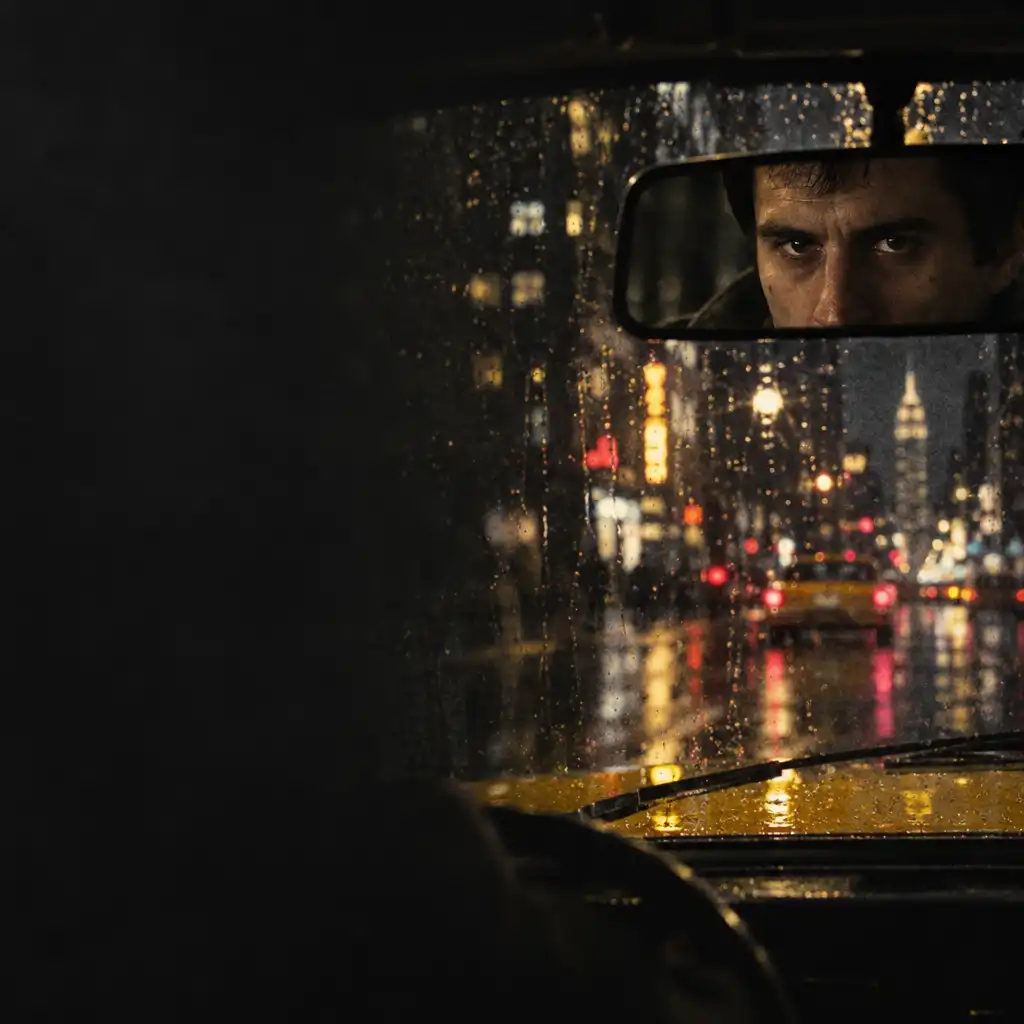
Travis Bickle is a Vietnam War veteran working as a night-shift taxi driver in New York City. His alienation and insomnia drive a desperate need for purpose, leading him to view the city as a moral sewer that he must cleanse. The trauma of his military service lingers beneath every interaction, while his inability to sleep turns the city into a recurring nightmare. He wants to be someone significant, but every attempt at connection pushes him further into isolation. Our film analysis section explores how Schrader's screenplay frames this descent.
Travis is socially awkward, prone to violent fantasies, and struggles to connect with others. His attempts at romance with Betsy, a campaign volunteer, fail after he takes her to a pornographic film. His growing bond with Iris, a twelve-year-old sex worker, becomes the focus of his misguided heroism. He cannot articulate his emotions, so he translates them into action—often destructive. The film's famous mirror scene, where he rehearses confrontation, reveals a man performing strength rather than feeling it.
Travis's internal conflict between his desire for connection and his violent impulses escalates throughout the film. His transformation from lonely insomniac to self-appointed vigilante is ambiguous, leaving viewers to question whether he finds redemption or merely notoriety. The ending, with its newspaper clippings and Betsy's quiet admiration, can be read as genuine change or as a fantasy of recognition. We mark this as an interpretive question rather than a settled fact.
Travis Bickle embodies the alienated antihero of 1970s American cinema. He symbolises the failure of post-Vietnam social integration and the dangerous allure of vigilantism. The taxi itself becomes a glass cage—moving through the city but never belonging to it. His story remains a touchstone for character-driven storytelling, influencing antiheroes from Tony Soprano to the Joker. Key symbols include the rearview mirror, the mohawk, and the rain-slicked streets.
Character Gallery
A survivor whose pragmatism and maternal instinct redefine the action hero.

A chilling embodiment of fate and moral indifference.

A pregnant police chief whose decency anchors a darkly comic crime story.
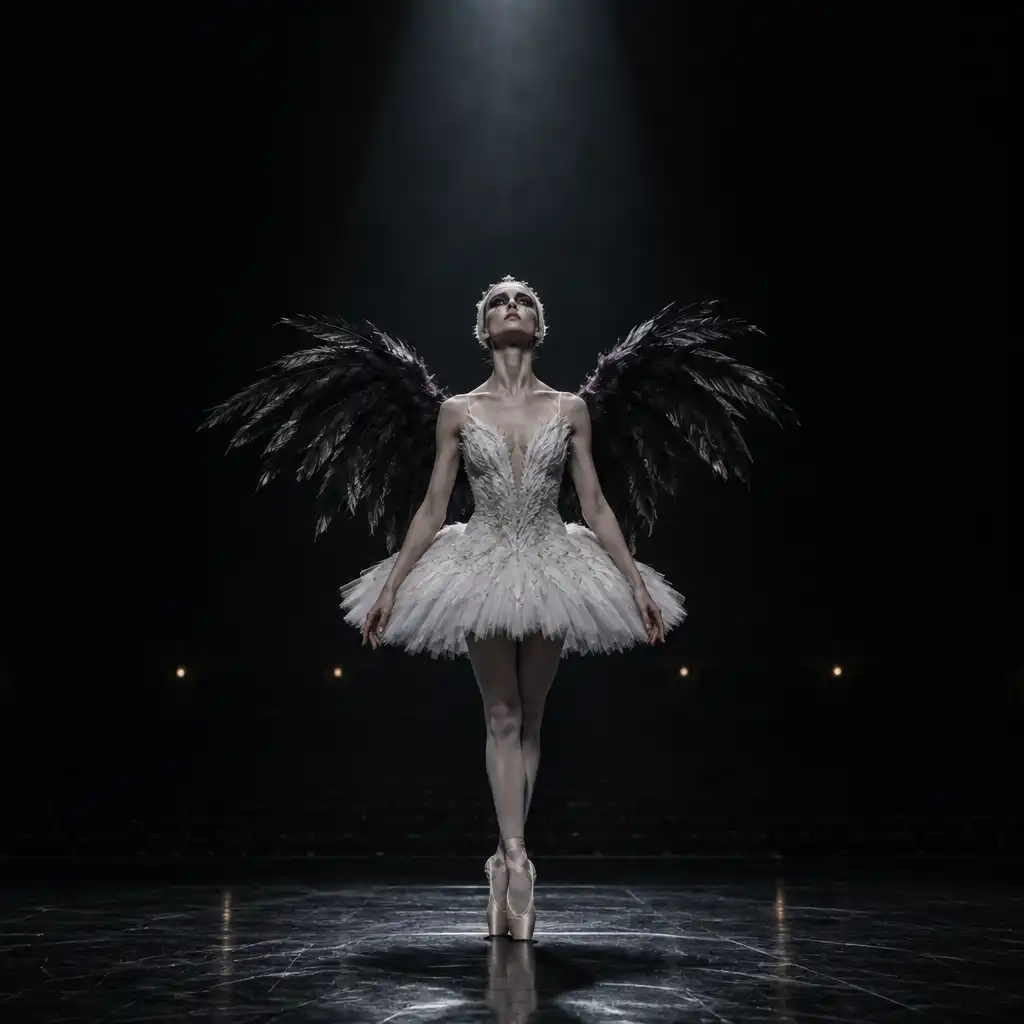
A ballerina whose pursuit of perfection fractures her identity.
Editorial Approach
Cinema Folio's character profiles combine close reading of performance, script, and direction with contextual understanding of genre and era. We distinguish between what is explicitly shown on screen and what is interpretive opinion. Our analyses are grounded in film scholarship but written for curious viewers. We pay attention to gesture, costume, framing, and repetition—the small choices that reveal a character's inner life. Explore our film analysis section for broader thematic essays.
Character motivations and symbolic meanings are often open to multiple readings. We clearly mark our interpretations as such, inviting readers to engage critically and form their own conclusions. A character like Travis Bickle can be read as a warning, a symptom, or a tragic figure—and all three readings can coexist.
Character Archetypes
Flawed protagonists who challenge moral conventions, from Travis Bickle to Tony Soprano. They compel us to question empathy and justice, often blurring the line between victim and perpetrator.
Guides who shape the hero's journey, such as Obi-Wan Kenobi or Morpheus. They embody wisdom and sacrifice, often departing at a crucial moment so the hero can stand alone.
Characters who disrupt order through wit and chaos, like the Joker or Loki. They expose societal hypocrisies and force other characters to confront uncomfortable truths.
Ordinary individuals thrust into extraordinary circumstances, such as George Bailey or Andy Dufresne. They ground stories in relatable humanity and remind us that courage is a choice.
A great character is a mirror held up to the audience; we see our fears, desires and contradictions reflected in their choices.
Featured Character Spotlight
Clarice Starling is an FBI trainee driven by a childhood trauma involving lambs. Her determination to save Catherine Martin from Buffalo Bill stems from a deep need to silence the screaming lambs of her past. Raised in rural West Virginia, she carries the weight of her father's death and her own perceived failure. Assigned to interview Hannibal Lecter, she must prove herself in a male-dominated institution that often underestimates her.
Clarice is intelligent, empathetic, and resilient. Her fraught relationship with Hannibal Lecter is a battle of wits and psychological manipulation, as he trades insights for intimate details of her past. Her rapport with her mentor Jack Crawford is paternalistic but supportive, though it also places her in danger. Throughout the film, she remains isolated—a woman navigating corridors of power where she is both scrutinised and dismissed.
Clarice's internal conflict is between her professional duty and her personal demons. By the film's end, she has confronted Buffalo Bill and, in a sense, silenced the lambs, but the cost is ambiguous. The final phone call from Lecter suggests that her past will never fully release her. We read this as an interpretive marker: she has grown, but not without scars.
Clarice Starling represents the modern female hero: competent, vulnerable, and morally grounded. Her journey through the male-dominated worlds of the FBI and Lecter's mind makes her a landmark in thriller cinema. She influenced a generation of female protagonists who are defined by intelligence and empathy rather than physical dominance. The lambs, the basement, and the moth all carry symbolic weight in her arc.

Explore Further
Discover more through our film reviews, plot summaries, and film analysis sections. Each offers a different lens on the art of cinema.
Character analysis is an interpretive art. Our profiles are informed by film scholarship and close viewing, but they are not definitive. We encourage you to watch the films, form your own interpretations, and share your thoughts with us at [email protected].